 Tweets by @BadrJafar


‘They Stayed, Returned and Carried On’ – How UAE’s Community Showed Deeper Bonds in Crisis: Arabian Business
H.E. Badr Jafar, Special Envoy to the UAE Minister of Foreign Affairs for Business and Philanthropy, says the decision of many residents to stay and return during recent tensions reflects a deeper, hard-earned sense of belonging in the UAE
As conflict disrupted airspace and shipping across the Gulf in recent weeks, one of the most striking developments in the United Arab Emirates was not economic, but human.
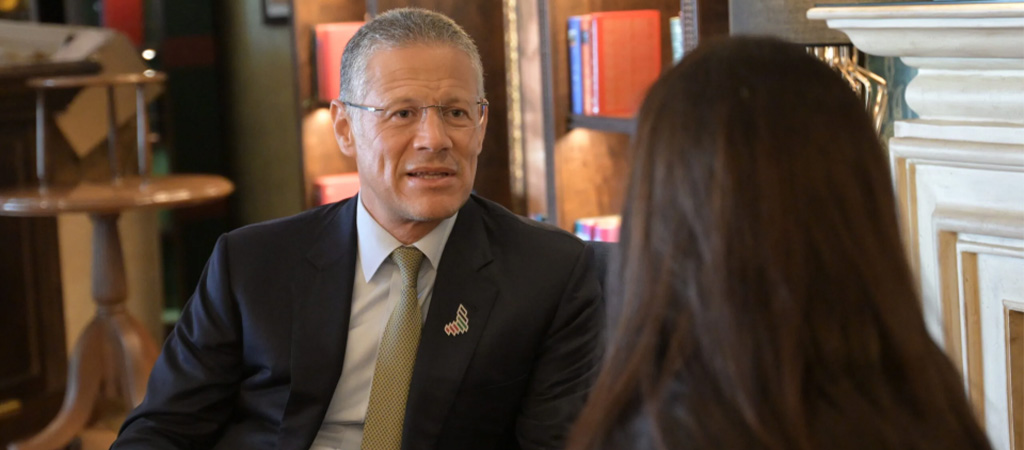
“What has been far more striking is how many stayed,” Badr Jafar, special envoy to the UAE minister of foreign affairs for business and philanthropy, said in an interview with Arabian Business.
In a country where more than 200 nationalities live and work, and expatriates make up the majority of the population, early expectations had pointed to a potential outflow as tensions escalated following a US-Israel military campaign against Iran and subsequent retaliatory strikes.
Instead, most residents remained, with some who initially left already returning, Jafar said.
“It tells you that the UAE has crossed a threshold that many outside observers still have not recognised,” he said.
‘Not a stopover’
The UAE has long been described as a transient hub — a place people pass through for work or opportunity. Jafar said recent events suggest a different reality.
“In a society where nine out of ten residents were born elsewhere, belonging is not defined by ethnicity or religion,” he said. “It is defined by contribution and mutual trust.”
That sense of belonging, he said, has been built over decades through institutions and policy choices, and was evident in how daily life continued during the escalation.
“People have built lives here, invested here, raised families here. The UAE is not a stopover. It is where they belong,” he said.
He pointed to the case of a long-term resident killed by falling debris during the initial strikes as an example of how deeply rooted those lives have become.
“He was not passing through. He was home,” Jafar said.
Despite disruptions to aviation and shipping, core systems and daily routines have largely held, with businesses open, schools operating and essential services functioning.
That continuity, Jafar said, reflects not only infrastructure but also social cohesion.
“You can have the best infrastructure in the world, but if the social fabric tears under pressure, nothing else holds,” he said.
Solidarity in practice
During the crisis, a fundraising event in Dubai raised more than $300 million for global childhood malnutrition, setting a world record.
For Jafar, the moment was emblematic.
“A society under attack, during Ramadan, coming together not to retreat inward but to reach outward,” he said. “That is cohesion in its most powerful form. It cannot be manufactured, and it cannot be bombed away.”
While markets initially reacted with caution, Jafar said conversations with investors have since stabilised.
“The question serious capital is asking is not ‘Should we leave?’” he said. “It is ‘How do we position for the recovery?’”
The UAE’s broader economic model, built on openness to trade, capital and people, has faced pressure during the escalation, particularly as infrastructure became a target.
“What is under attack is not just infrastructure, but an idea,” Jafar said. “The idea that an open, globally connected economy can thrive in a contested region.”
He said the response has reinforced that model rather than weakened it.
“This moment does not redefine the UAE,” he said. “It reveals what the UAE already is.”
Source: Arabian Business