 Tweets by @BadrJafar


The UAE–Germany state visit points to the next infrastructure boom
Its significance lies in a model of UAE–European partnership, built around assets that create value every day and keep options open
By H.E. Badr Jafar, Special Envoy of the UAE Minister of Foreign Affairs for Business & Philanthropy, and CEO of Crescent Enterprises
This year the world will invest a record US$3.4 trillion in energy, according to the International Energy Agency, and US$2.6 trillion in artificial intelligence, according to Gartner. Yet when the World Economic Forum and McKinsey asked business leaders whether they felt prepared for the next disruption, more than four in five said they did not. Capital is moving at historic scale. Preparedness is not.
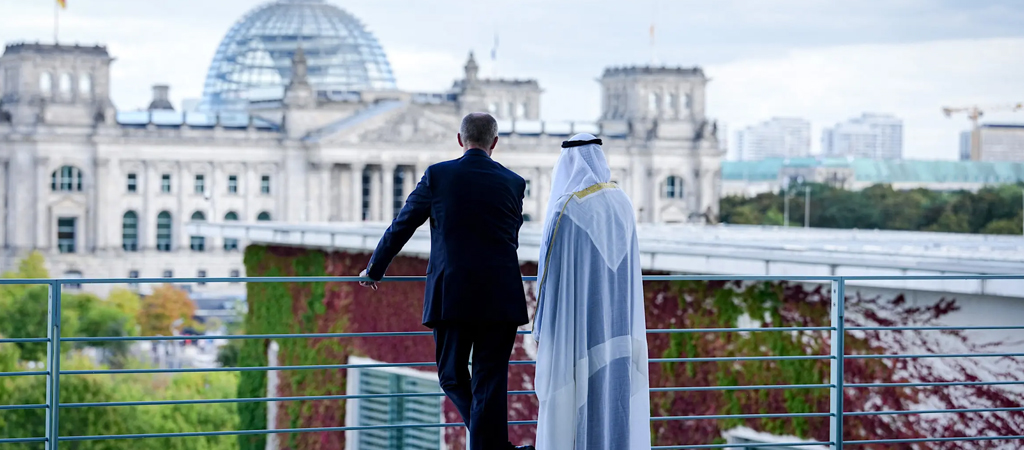
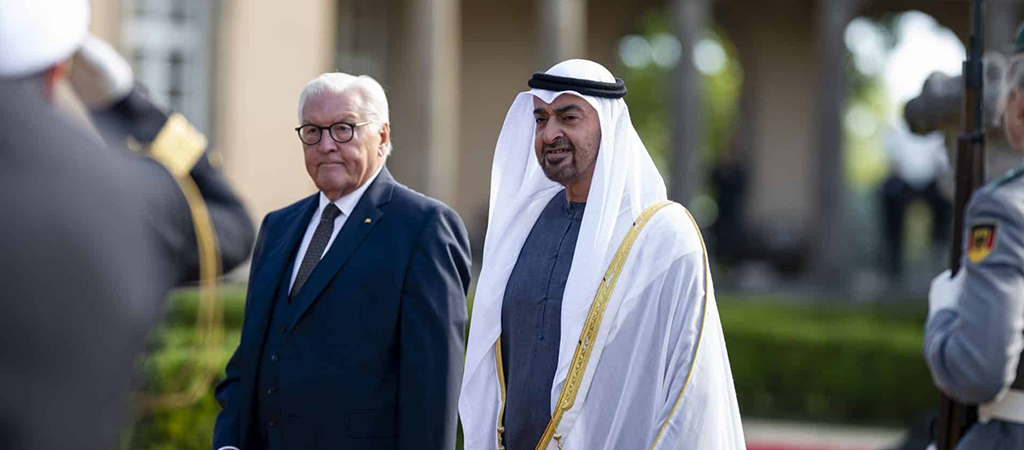
This week’s state visit to Germany by His Highness Sheikh Mohamed bin Zayed Al Nahyan, UAE President will lay the foundation for German-Emirati co-operation to build robust economies in this new global environment. The visit marks a development in economic geography, and it points to where the next major investment cycle may lie. At a moment when Germany is reassessing energy security, supply chains and long-term industrial competitiveness, the UAE is accelerating international partnerships and the deployment of long-duration capital. The two objectives meet around a single proposition: that preparedness can be an engine of growth, not just insurance against disruption.
Non-oil trade between the UAE and Germany rose 14 per cent last year to US$15.5 billion, with UAE exports to Germany up by more than half. Some 2,000 German companies operate from the UAE, many using its network of 38 Comprehensive Economic Partnership Agreements as a base from which to serve the Middle East, Africa and Asia. Emirati capital, in turn, is invested in German industrial capacity, from Covestro’s materials business to offshore wind in the Baltic Sea and aluminum recycling in Hanover. The relationship has moved from exchange to integration: co-investment, joint delivery and collaboration in third markets.
This state visit gives that shift a weight and practical momentum, backed by multi-year, multi-billion-euro commitments across energy, materials and finance. The partnerships that ADNOC and XRG have built with German industrial leaders show a relationship maturing beyond energy trade into industrial collaboration and long-term ownership.
Doubling down on trusted partners has shaped the UAE’s response to this year’s regional strain. We accelerated partnerships rather than narrowing them, and the private sector kept expanding and growing. In August, business conditions across the UAE’s non-oil economy improved at their fastest pace since December 2024, and new orders grew as quickly as at any point in more than two years.
This matters because volatility has become structural rather than episodic, and shocks no longer stay local. A shipping disruption in the Gulf changes the price of bread in East Africa and the cost of inputs at a factory in Bavaria. Energy shocks travel through prices. Climate pressure exposes weak links in water and transport. AI drives demand for power and compute. Digital dependencies cross borders instantly. Not every disruption can be predicted. Very few remain contained. This year has taught a wider principle: resilience is rarely improvised in the moment. It is the dividend of infrastructure, relationships and capabilities built beforehand.
There is no single answer to every exposure. Sometimes reserves, duplication or domestic capacity are the right response. Retreat from interdependence is not. The better approach is to build for growth with resilience built in: assets, capabilities and relationships that create commercial or social value in normal conditions, while preserving room to reroute, substitute or scale under pressure.
The UAE’s east coast showed this in practice. Ports outside the Strait of Hormuz, connected to the rest of the country by pipeline, road and now rail, were not built as idle insurance. They were built as working commercial gateways, with customs systems, technology and people already in place. This year did not create that capability. It revealed the value of investment made beforehand.
Germany and the UAE bring complementary strengths to the investment race now under way. Germany contributes engineering depth, research, standards and skilled industrial capacity. The UAE contributes capital, infrastructure, speed of execution and access to the fastest-growing markets, and more. Applied together across advanced manufacturing, clean energy, AI and digital infrastructure, those strengths can turn a bilateral project pipeline into a platform for UAE–European growth.
The next step is to turn alignment into delivery. Watch for three things: a pipeline of bankable projects rather than a list of memoranda; capital paired with industrial expertise, and progress toward an EU–UAE trade agreement that reduces friction and widens market access.
This state visit is a starting signal. The opportunity is to direct capital towards infrastructure that strengthens productivity, opens new markets and gives economies greater room to grow and adapt. Germany and the UAE are choosing that path together. That is what the next infrastructure boom looks like. It will be led by the best builders – and strongest partnerships.
Source: Arabian Business