 Tweets by @BadrJafar


Germany And The UAE: The Time To Build Is Now
This week’s commitments are not a transaction. They are a model for how two regional leaders turn uncertainty into industrial capacity, and build through it rather than after it.
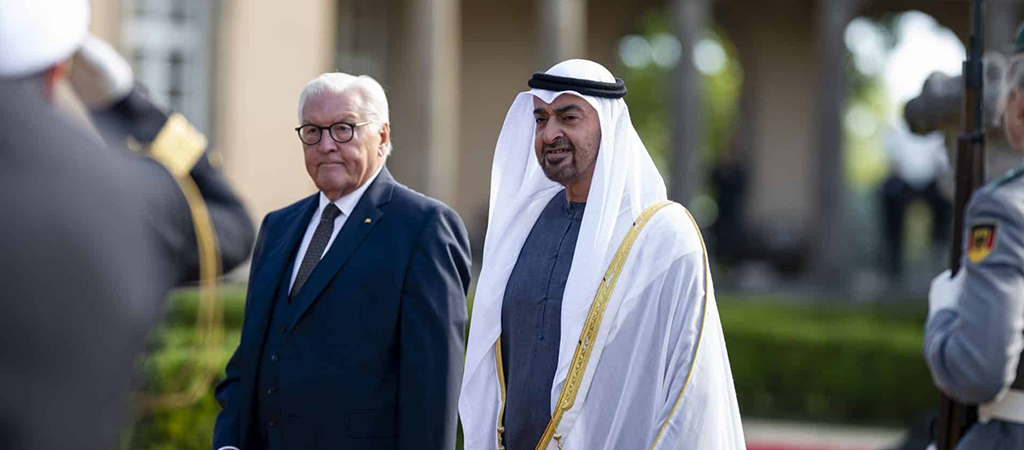
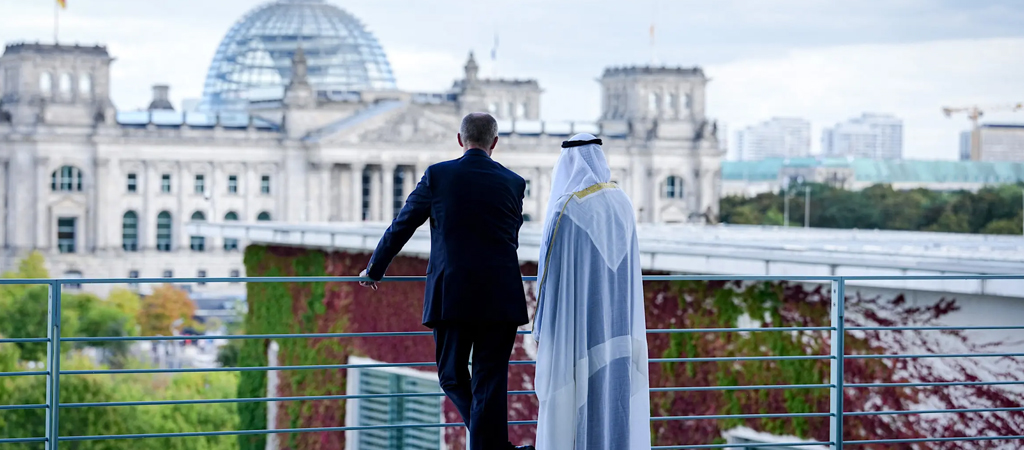
This week, during the state visit to Germany by His Highness Sheikh Mohamed bin Zayed Al Nahyan, UAE President, our two countries announced commitments of € 40 billion across energy, materials and finance. In Germany, a number of that size invites two fair questions. What is it for? And what does it say about the partner behind it? Both deserve straight answers.
Start with what it is for. The partnership began with security of supply, and it still rests on it. The UAE is a reliable supplier of energy to Germany and Europe, and it will remain one. What has changed is the scope. Low-carbon ammonia has been delivered to Hamburg. Emirati capital holds nearly half of the Baltic Eagle offshore wind farm, which has been feeding the German grid since last summer. LNG supply agreements are in place with RWE and SEFE.
Cooperation now reaches into hydrogen, sustainable aviation fuel, grid flexibility and energy-efficient data centres. The vocabulary has widened from barrels and cargoes to molecules, electrons, data and skills. This is not a departure from the original partnership. It is its maturation.
Materials are the harder test, and the more revealing one. XRG’s partnership with Covestro was completed after extensive review by German and European authorities, and came with a €1.17 billion capital increase to fund the company’s growth. Its success will not be measured by the size of the transaction. It will be measured by the industrial value created in Germany over time: research funded, plants modernised, skilled jobs sustained. That is the standard we accept, and the one German partners are right to expect: transparency and commercial discipline, respect for fair competition and co-determination, and long-term capital that behaves like an owner, not a trader.
Now the second question: who is the partner? A generation ago the UAE was known mainly as an exporter of energy. Today non-oil activity accounts for more than three-quarters of our GDP. Non-oil foreign trade grew 27 per cent last year to pass US$1 trillion for the first time. A network of close to 38 Comprehensive Economic Partnership Agreements links the UAE to markets of some three billion people. Sovereign wealth of more than US$2 trillion has made the country one of the world’s most significant sources of long-term capital. None of this was built for the UAE alone. It was built to connect.
Germany saw the value of that connection early. Diplomatic relations date to 1972. A strategic partnership followed in 2004. Chancellor Merz was in Abu Dhabi in February; this week’s state visit answers it. Some 2,000 German companies operate from the UAE, many serving markets far beyond it, and the UAE is Germany’s largest trading partner in the Gulf. Bilateral trade passed €13.5 billion in 2025, and the flow runs both ways: German imports from the UAE rose by more than half last year. For the Mittelstand in particular, the UAE offers something hard to find elsewhere: a stable base within a few hours’ flight of three continents, with preferential access to the fastest-growing markets in Asia and Africa.
Then there is the question I am asked most often in Germany: what about Hormuz? Our position is unequivocal. International waterways, and the wider arteries on which trade depends, must remain open and secure for all, in accordance with international law. Yet the harshest consequences of a closed strait are felt far from it. Until this year, roughly a third of the world’s seaborne fertiliser trade and close to half of its traded sulphur passed through the Strait. When those flows stop, farmers from Bavaria to Bangladesh pay more for fertiliser, families pay more for food, and factories thousands of kilometres away lose critical inputs. Interdependence has a human face.
The answer is to protect open passage and to build credible alternatives. Germany knows this. In 2022 it built floating LNG terminals in months, not years. The UAE had done much of its building earlier. When shipping was diverted this year, ports on our east coast, outside the Strait, were already operating as working commercial gateways. Pipeline capacity already ran across the country. A national railway already linked ports, production centres and inland markets. Strategic storage, and close coordination between government, infrastructure operators and industry, allowed the system to absorb sudden shifts in trade flows and prioritise essential supplies within days. The disruption did not create that capacity. It revealed it.
That is the lesson I would offer any economy under pressure. Resilience need not mean retreat from interdependence, or costly duplication. It can mean building for growth with resilience built in: productive assets and networks that create value in normal times, and keep room to reroute, substitute or scale when disruption strikes.
Germany is under pressure of its own. High energy costs, demographic change and strategic competition are testing a model that has served Europe well for generations. Moments of pressure can be moments of leadership. Germany has the research base, the talent, the institutions and the industrial depth to set an ambitious course, and to create opportunity across Europe as it does so. We are not simply investing in what Germany has built. We are investing in what it builds next, because our strengths fit together. Germany brings engineering depth, research and standards. The UAE brings long-duration capital, infrastructure, speed of execution and access to growth markets. That is the foundation of a modern industrial partnership: advanced manufacturing and materials, clean-energy systems, efficient data centres and AI infrastructure, water and cooling technologies, logistics platforms, and the skills to run them.
Governments set the frame. Business lays the cables. Neither carries the load alone. This visit, and in time an EU-UAE trade agreement, can set direction, establish standards and reduce friction. Delivery will come business to business: co-investment, joint industrial capacity, shared research, reciprocal market access. There is also a third builder, the one we talk about least. Strategic philanthropy can take the early risks that neither markets nor public budgets will, in skills, in research and in the communities that give an industrial partnership its social licence.
The needs are now unmistakable: diversified energy routes, flexible grids, dependable ports, AI-ready infrastructure, advanced materials and trusted talent networks. It is a generational opportunity to create value. This is the moment for two ambitious regional leaders to act with disciplined urgency: to deepen partnerships, put capital to work and build together – not once uncertainty has passed, but through it.
Source: The Pioneer